

Blog

Digital and Quantum computers, part 8

Comparing Digital and Quantum Computers, Part 8: Quantum Computer technologies

Everyone in the IT world is wondering how big a threat quantum computers pose to cryptography and how to deal with the problem. This series of articles tries to explain the problem in a popular way. After estimation of power consumption gain an overview of the technologies studied and used.

Technology overview

A person interested in the issue of quantum computers should take a look at the usability of the technologies of the mentioned devices. There is such a list here, but it does not try to be exhaustive. Rather, it is an overview of those available and used. In addition, the volume of the device includes the value including all supporting components (cooling including compressors, vacuum pumps, control, measurement, classical computers for subsequent calculations, and others). Based on the power consumption, it is possible to estimate the size of the actual computing components. Such an estimate is subject to error, because without specific knowledge of the design, it is not possible to obtain a sufficient amount of specific data.

TechnologyWorking temperatureComputer power consumption Cooling power consumptionSystem power consumptionDevice volumeNumber of qubits

Superconducting qubits

(IBM, Google)

10–20 mK~mW 15–25kW15–25kW~1–2m350-127

Trapped ions

(IonQ, Honeywell)

μK~mW~20kW ~25kW~1m310-32

Neutral atoms

Optical traps

μK~mW5–10kW5–10kW < 1m350-200
Photonic qubitsroom~mW0.5–1kW4–5kW< 1m3 50-200

Spin qubits

in semiconductors

(Si, SiGe)

10–100 mK~mW ~mW10–20kW<1m310-50

Such a view leads to the impression that quantum technologies themselves are huge complexes. However, the situation is significantly different. Current quantum processors, although they are huge compared to digital processors, are relatively small. But the ratio of the volume of the cooling system to the volume of the quantum processor itself is approximately in the range of 107:1 to 108:1. The largest volume in the system is therefore occupied by the cooling and insulation system. For comparison, an overview of the dimensions of the processors themselves and the cooling systems.

TechnologyQPU volumeCooling volumeRatio
Superconducting qubits~0.1 cm310–30 m3108:1
Spin qubits (Si)~0.05 cm35–20 m3108:1
Ion traps~5 cm3~0.5–2 m3105–106:1
Neutral atoms~1 cm3~0.3–1 m3105–106:1
Photonic chips~0.5 cm3~0.1 m3104–105:1

If we were to talk only about the technologies and the operating temperatures used, the following overview can be provided from the available sources. Again, this overview is not perfect and contains only publicly available information. Such an overview shows that some types of quantum circuits are not suitable for computers at the current level of knowledge, others require too low temperatures and therefore significant demands on energy resources for adequate cooling.

TechnologyStateQubit typeTypical operating temperatureNote
Superconducting Josephson Circuits
(SQUID)
ProductionMacroscopic superconducting circuit 10–20 mKIBM, Google, Rigetti
Ion trapsProductionInternal state of the ion~300 K (ions effectively ~mK) IonQ, Quantinuum
Neutral atoms
(Rydberg)
ProductionExcited atoms1–10 μKQuEra, Pasqal
Linear optical QCActive researchPhotons300 K (detectors 1–4 K)Xanadu
NV (nitrogen vacancy)
centers in diamond crystals
Production / sensorsElectron spin 300 K (better <10 K)RT qubits
Spin qubits in semiconductors
(Si, GaAs)
Active researchElectron spin10–100 mK Intel , academic
Donor qubits
(P:Si, Bi:Si)
Active researchNuclear/electron spin10–100 mK Very long coherence
Topological qubits
(Majoran fermions)
ResearchNon-Abelian quasiparticles10–50 mK No working qubit yet?
Bose–Einstein condensate (BEC)ResearchCollective state10–100 nKSimulation
Optical gratingsResearchNeutral atomsnK–μKQuantum simulators
CQED (atoms in cavities)Active researchAtom–photonμK–mKStrong bond
Quantum dots
(charge position)
ResearchCharge<100 mKStrong decoherence
Quantum dots
(spintronics)
Active researchSpin10–100 mKVery promising
Electrons to heliumResearchSpin/orbital<100 mKExtremely low noise
Fullerene traps
(spintronics)
ResearchSpin<10KESR manipulation
Carbon nanospheres
(spintronics)
TheoreticalSpin<10KMaterials research
Molecular magnetsResearchMolecular spin<1KShort coherence
Magnon qubitsResearchSpin wave<1KHybrid systems
Mechanical qubits
(optomechanics)
ResearchVibration modes<100 mKHybrid
Exciton qubitsResearchExciton<10KShort lifespan
PolaritonsResearchLight–matter4–300KAnalog simulations
Superfluid helium
(phonons, vortices)
ResearchCollective fashions<1K Low noise
NMR QC – solutionHistoricalNuclear spins300KNot scalable
Solid-phase NMR
(phosphorus in Si)
Active researchNuclear spin<1K High stability
Hybrid atom–photonic systemsResearchMixedμK–mKQuantum networks
Floquet qubitsTheoretical/researchPeriodically controlledPlatform dependent Topological phases

Based on the information provided, it is possible to very roughly extrapolate the possible existence of quantum computers. If they could be built, given the progress in miniaturization, they could possibly achieve the following parameters. Such an estimate shows that theoretically we would be able to develop some computers, but the energy requirements would be extreme. The problem with such considerations is the limitation given by the estimate of the volume of the system. Currently, the volumes available include cooling technologies, insulation and support systems, so such an estimate is quite problematic. Estimates of the volume based on current information (this may change significantly) are then approximately as follows:

TechnologyProbability of CRQC 2035–2040Working temperatureEstimation of physical qubits System volume estimationSphere equivalent (diameter)Note
Superconducting qubits
(Josephson)
High10–20 mK1–20 million300–1000 m3 8–12 mFastest roadmaps, high cooling overhead
Ion trapsMedium – highions μK, HW ~300 K1–10 million200–600 m3 7–10 mExcellent coherence, slower gates
Neutral atoms
(Rydberg)
Medium – high1–10 μK1–10 million150–500 m3 6–9 mHigh qubit density
Topological/cat qubitsMedium (uncertain)10–50 mK0.1–1 million100–300 m3 6–8 mPotentially low overhead, but unverified
Photonic QC
(error-corrected)
Medium300 K (detectors 1–4 K) 10–100 million (virtual)50–200 m34–7 mNo deep cryogenics
Spin qubits in Si
(CMOS)
Medium10–100 mK1–10 million100–400 m3 6–9 mHigh integration, slower development

To be continued in the next section Quantum Computer evaluation (April 6th 2026)

References:

  1. Superconducting Qubits: Current State of Play
    Source: Home page webu
  2. High-fidelity quantum logic gates using trapped ions
    Source: Home page webu
  3. Programmable Rydberg atom arrays for quantum computing
    Source: Home page webu
  4. Photonic quantum computing: from fundamental principles to experimental implementations
    Source: Home page webu
  5. Diamond NV centers for quantum sensing and computing
    Source: Home page webu
  6. Silicon quantum electronics
    Source: Home page webu
  7. Quantum computing with donor spins in silicon
    Source: Home page webu
  8. Topological quantum computation
    Source: Home page webu
  9. Bose–Einstein condensation in dilute gases
    Source: Home page webu
  10. Cavity quantum electrodynamics: Strong coupling and applications
    Source: Home page webu
  11. Quantum dot qubits for quantum computation
    Source: Home page webu
  12. Electrons on helium: a platform for quantum computing
    Source: Home page webu
  13. Fullerene-based spin qubits: principles and applications
    Source: Home page webu
  14. Molecular nanomagnets as qubits for quantum computing
    Source: Home page webu
  15. Optomechanical quantum systems and mechanical qubits
    Source: Home page webu
  16. Exciton-polariton qubits in semiconductor microcavities
    Source: Home page webu
  17. Superfluid helium as a platform for quantum simulations
    Source: Home page webu
  18. NMR quantum computation in liquid-state systems
    Source: Home page webu
  19. Hybrid atom–photon quantum networks
    Source: Home page webu
  20. Floquet engineering of quantum systems: topological phases
    Source: Home page webu

Autor článku:
Jan Dušátko
Jan Dušátko

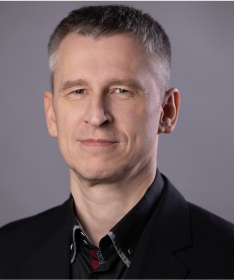
Jan Dušátko has been working with computers and computer security for almost a quarter of a century. In the field of cryptography, he has cooperated with leading experts such as Vlastimil Klíma or Tomáš Rosa. Currently he works as a security consultant, his main focus is on topics related to cryptography, security, e-mail communication and Linux systems.

1. Introductory Provisions

1.1. These General Terms and Conditions are, unless otherwise agreed in writing in the contract, an integral part of all contracts relating to training organised or provided by the trainer, Jan Dušátko, IČ 434 797 66, DIČ 7208253041, with location Pod Harfou 938/58, Praha 9 (next as a „lector“).
1.2. The contracting parties in the general terms and conditions are meant to be the trainer and the ordering party, where the ordering party may also be the mediator of the contractual relationship.
1.3. Issues that are not regulated by these terms and conditions are dealt with according to the Czech Civil Code, i.e. Act No.89/2012 Coll.
1.4. All potential disputes will be resolved according to the law of the Czech Republic.

2. Creation of a contract by signing up for a course

2.1. Application means unilateral action of the client addressed to the trainer through a data box with identification euxesuf, e-mailu with address register@cryptosession.cz or register@cryptosession.info, internet pages cryptosession.cz, cryptosession.info or contact phone +420 602 427 840.
2.2. By submitting the application, the Client agrees with these General Terms and Conditions and declares that he has become acquainted with them.
2.3. The application is deemed to have been received at the time of confirmation (within 2 working days by default) by the trainer or intermediary. This confirmation is sent to the data box or to the contact e-mail.
2.4. The standard time for registration is no later than 14 working days before the educational event, unless otherwise stated. In the case of a natural non-business person, the order must be at least 28 working days before the educational event.
2.5. More than one participant can be registered for one application.
2.6. If there are more than 10 participants from one Client, it is possible to arrange for training at the place of residence of the intermediary or the Client.
2.7. Applications are received and processed in the order in which they have been received by the Provider. The Provider immediately informs the Client of all facts. These are the filling of capacity, too low number of participants, or any other serious reason, such as a lecturer's illness or force majeure. In this case, the Client will be offered a new term or participation in another educational event. In the event that the ordering party does not agree to move or participate in another educational event offered, the provider will refund the participation fee. The lack of participants is notified to the ordering party at least 14 days before the start of the planned term.
2.8. The contract between the provider and the ordering party arises by sending a confirmation from the provider to the ordering party.
2.9. The contract may be changed or cancelled only if the legal prerequisites are met and only in writing.

3. Termination of the contract by cancellation of the application

3.1. The application may be cancelled by the ordering party via e-mail or via a data mailbox.
3.2. The customer has the right to cancel his or her application for the course 14 days before the course takes place without any fees. If the period is shorter, the subsequent change takes place. In the interval of 7-13 days, an administrative fee of 10% is charged, cancellation of participation in a shorter interval than 7 days then a fee of 25%. In case of cancellation of the application or order by the customer, the possibility of the customer's participation in an alternative period without any additional fee is offered. The right to cancel the application expires with the implementation of the ordered training.
3.3. In case of cancellation of the application by the trainer, the ordering party is entitled to a full refund for the unrealized action.
3.4. The ordering party has the right to request an alternative date or an alternative training. In such case, the ordering party will be informed about all open courses. The alternative date cannot be enforced or enforced, it depends on the current availability of the course. If the alternative training is for a lower price, the ordering party will pay the difference. If the alternative training is for a lower price, the trainer will return the difference in the training prices to the ordering party.

4. Price and payment terms

4.1. By sending the application, the ordering party accepts the contract price (hereinafter referred to as the participation fee) indicated for the course.
4.2. In case of multiple participants registered with one application, a discount is possible.
4.3. The participation fee must be paid into the bank account of the company held with the company Komerční banka č. 78-7768770207/0100, IBAN:CZ5301000000787768770207, BIC:KOMBCZPPXXX. When making the payment, a variable symbol must be provided, which is indicated on the invoice sent to the client by the trainer.
4.4. The participation fee includes the provider's costs, including the training materials. The provider is a VAT payer.
4.5. The client is obliged to pay the participation fee within 14 working days of receipt of the invoice, unless otherwise stated by a separate contract.
4.6. If the person enrolled does not attend the training and no other agreement has been made, his or her absence is considered a cancellation application at an interval of less than 7 days, i.e. the trainer is entitled to a reward of 25% of the course price. The overpayment is returned within 14 days to the sender's payment account from which the funds were sent. Payment to another account number is not possible.
4.7. An invoice will be issued by the trainer no later than 5 working days from the beginning of the training, which will be sent by e-mail or data box as agreed.

5. Training conditions

5.1. The trainer is obliged to inform the client 14 days in advance of the location and time of the training, including the start and end dates of the daily programme.
5.2. If the client is not a student of the course, he is obliged to ensure the distribution of this information to the end participants. The trainer is not responsible for failure to comply with these terms and conditions.
5.2. By default, the training takes place from 9 a.m. to 5 p.m. at a predetermined location.
5.3. The trainer can be available from 8 a.m. to 9 a.m. and then from 17 a.m. to 6 p.m. for questions from the participants, according to the current terms and conditions.
5.4. At the end of the training, the certificate of absorption is handed over to the end users.
5.5. At the end of the training, the end users evaluate the trainer's approach and are asked to comment on the evaluation of his presentation, the manner of presentation and the significance of the information provided.

6. Complaints

6.1. If the participant is grossly dissatisfied with the course, the trainer is informed of this information.
6.2. The reasons for dissatisfaction are recorded in the minutes in two copies on the same day. One is handed over to the client and one is held by the trainer.
6.3. A statement on the complaint will be submitted by e-mail within two weeks. A solution will then be agreed within one week.
6.4. The customer's dissatisfaction may be a reason for discontinuing further cooperation, or financial compensation up to the price of the training, after deduction of costs.

7. Copyright of the provided materials

7.1. The training materials provided by the trainer in the course of the training meet the characteristics of a copyrighted work in accordance with Czech Act No 121/2000 Coll.
7.2. None of the training materials or any part thereof may be further processed, reproduced, distributed or used for further presentations or training in any way without the prior written consent of the trainer.

8. Liability

8.1. The trainer does not assume responsibility for any shortcomings in the services of any third party that he uses in the training.
8.2. The trainer does not assume responsibility for injuries, damages and losses incurred by the participants in the training events or caused by the participants. Such costs, caused by the above circumstances, shall be borne exclusively by the participant in the training event.

9. Validity of the Terms

9.1 These General Terms and Conditions shall be valid and effective from 1 October 2024.

Consent to the collection and processing of personal data

According to Regulation (EU) No 2016/679 of the European Parliament and of the Council on the protection of individuals with regard to the processing of personal data and on the free movement of such data and repealing Directive 95/46/EC (General Data Protection Regulation, hereinafter referred to as "the Regulation"), the processor xxx (hereinafter referred to as "the Controller") processes personal data. Individual personal data that are part of the processing during specific activities at this web presentation and in the course of trade are also broken down.
Although the collection of data is ubiquitous, the operation of this website is based on the right to privacy of each user. For this reason, the collection of information about users takes place to the extent absolutely necessary and only if the user decides to contact the operator. We consider any further collection and processing of data unethical.

Information about the records of access to the web presentation

This website does not collect any cookies. The site does not use any analytical scripts of third parties (social networks, cloud providers). For these reasons, an option is also offered for displaying the map in the form of a link, where the primary source is OpenStreet and alternatives then the frequently used Maps of Seznam, a.s., or Google Maps of Google LLC Inc. The use of any of these sources is entirely at the discretion of the users of this site. The administrator is not responsible for the collection of data carried out by these companies, does not provide them with data about users and does not cooperate on the collection of data.
Logging of access takes place only at the system level, the reason being the identification of any technical or security problems. Other reasons are overview access statistics. No specific data is collected or monitored in this area and all access records are deleted after three months.

Information about contacting the operator of the site

The form for contacting the operator of the site (administrator) contains the following personal data: name, surname, e-mail. These data are intended only for this communication, corresponding to the address of the user and are kept for the time necessary to fulfil the purpose, up to a maximum of one year, unless the user determines otherwise.

Information about the order form

In case of an interest in the order form, the form contains more data, i.e. name, surname, e-mail and contact details for the organisation. These data are intended only for this communication, corresponding to the address of the user and are kept for one year, unless the user determines otherwise. In the event that a business relationship is concluded on the basis of this order, only the information required by Czech law on the basis of business relations (company name and address, bank account number, type of course and its price) will continue to be kept by the administrator.

Information about the course completion document

Within the course, a course completion document is issued by the processor. This document contains the following data: student's name and surname, the name and date of the course completion and the employer's name. The information is subsequently used for the creation of a linear hash tree (non-modifiable record). This database contains only information about the provided names and company names, which may or may not correspond to reality and is maintained by the processor for possible re-issuance or verification of the document's issuance.

Rights of the personal data subject

The customer or visitor of this website has the possibility to request information about the processing of personal data, the right to request access to personal data, or the right to request the correction or deletion of any data held about him. In the case of deletion, this requirement cannot be fulfilled only if it is not data strictly necessary in the course of business. The customer or visitor of this website also has the right to obtain explanations regarding the processing of his personal data if he finds out or believes that the processing is carried out in violation of the protection of his private and personal life or in violation of applicable legislation, and the right to request removal of the resulting situation and to ensure the correction.
Furthermore, the customer/visitor of this website may request restriction of processing or object to the processing of personal data and has the right to withdraw his/her consent to the processing of personal data at any time in writing, without prejudice to the lawfulness of their processing prior to such withdrawal. For this purpose, the contact e-mail address support@cryptosession.cz is used.
The customer/visitor has the right to file a complaint against the processing of personal data with the supervisory authority, which is the Office for Personal Data Protection.